Rapid automated testing for Urinary Antigens
Pneumonia is a common illness affecting millions of people all over the world every year. It is a major cause of death in all age groups and a rapid diagnosis is essential to ensure the patient receives the appropriate treatment as quickly as possible.
Bacteria are the most common cause of community-acquired pneumonia (CAP), with Streptococcus pneumoniae isolated in nearly 50% of cases. The incubation period for pneumococcal pneumonia is only 1-3 days and infection can lead to bacteraemia, meningitis, pericarditis, empyema, purpura fulminans, endocarditis and/or arthritis.
A rapid diagnosis is essential as these infections can normally be treated with penicillin which is relatively inexpensive and does not induce antibiotic resistance at the same level as other antibiotics.
CAP can also be a result of infection by Legionella pneumophila, bacteria that are present in water and moist conditions. This is a severe pneumonia and if untreated it can lead to mental disorientation and death. Penicillin is not effective against Legionella as it is an intracellular bacterium, and treatment with antibiotics like macrolides or quinolones that penetrate the infected cells is required.
The diagnosis of pneumococcal pneumonia is based on the presence of clinical signs of pneumonia, chest radiograph, lung infiltrates and microbiological findings. It is often difficult to make a definite diagnosis and a positive bacterial culture from blood or pleura is also required in addition to clinical symptoms.
Bacterial culture can be time consuming and expensive, particularly for Legionella. It also requires technical expertise and efficient handling of samples.
The first S. pneumoniae urinary antigen test was developed and commercialised in 1999 and these days the main method in Europe for diagnosing Legionella infection is the Legionella urinary antigen test. The use of rapid urinary antigen tests aids the diagnosis and management of both community- and hospital-acquired pneumonia, perhaps even improving antibiotic stewardship.
The SD Biosensor Standard F system utilises a europium-based fluorescent chemistry to detect S. pneumoniae and L. pneumophila serogroups 1,3,5,6 and 8 in urine samples. The test is a single step without the need for urine sample dilution, and results are available within 15 minutes.
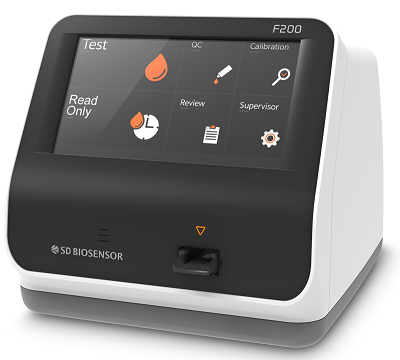
The F200 is a compact benchtop analyser with a 2D barcode system that provides automatic assay recognition and reagent identification.
The analyser reads and interprets the result automatically and ambiguous test results are a thing of the past!
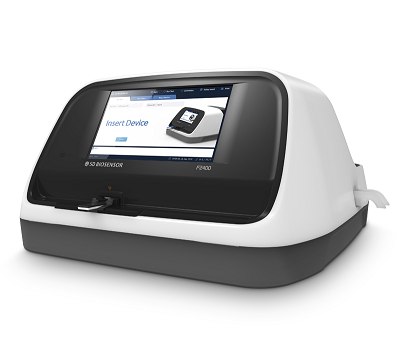
The F2400 benchtop analyser provides all this and more – it is a fast random access system with a throughput of up to 70 tests per hour across the wide range of assays available from SD Biosensor.
For more information or to arrange an on-site demonstration of the Standard F system, please contact us.