Why is a rapid G6PD test of interest?
Glucose-6-phosphate dehydrogenase (G6PD) is a housekeeping enzyme that plays a vital role in the prevention of cellular damage due to oxidative stress. Red blood cells are particularly vulnerable to oxidative stress due to their inability to replace cellular proteins as mature cells.
G6PD deficiency happens when the body does not have enough of the enzyme G6PD. It is the result of an inherited X-linked recessive genetic disorder and most often affects males. Many people have the condition and do not know that they have it.
Usually people feel completely well with G6PD deficiency unless they are exposed to a drug or chemical that can cause an acute (sudden) attack of red cell breakdown leading to anaemia. Sometimes the anaemia can be so severe that a blood transfusion is needed, but in most cases people recover quickly and without long-term complications. It is of course important to remove the causative agent.
There are many drugs that are known to cause problems in people with G6PD deficiency and these include some anti-malarials and certain antibiotics. Rasburicase, a treatment for acute leukaemia, has also been highlighted as a cause of G6PD deficiency haemolytic anaemia.
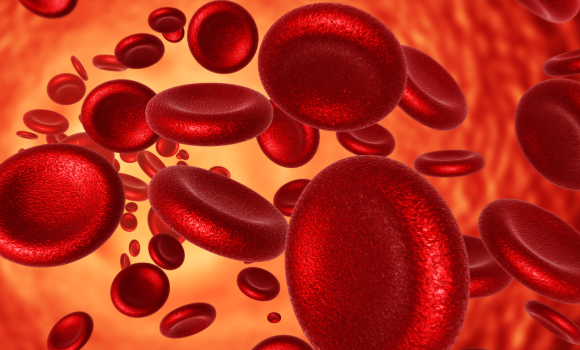 Red Blood Cells
Identification of G6PD deficiency and the increased risk of adverse reactions to certain drugs is important. Routine screening tests often include very manual and labour-intensive procedures which require accurate timing and the full attention of a trained biomedical scientist for the duration of the test. This can delay results for urgent samples, and limit possibilities out of hours.
A simple test with fast turnaround time would greatly benefit those patients who need urgent treatment for Acute Myeloid Leukaemia, High Grade Lymphoma or Malaria.
SD Biosensor Standard G6PD
The Standard G6PD system is an enzymatic colorimetric assay intended for the semi-quantitative measurement of G6PD activity and total haemoglobin (T-Hb) concentration. It differentiates between normal, intermediate and deficient G6PD activity levels for male and female samples and provides a G6PD activity value normalised for haemoglobin concentration (U/g Hb).
- Capillary blood test from finger prick or venous blood
- Test sample within 12 hours, or 120 hours if refrigerated
- Incubation time of 2 minutes
- Battery operated Analyser
- Operating Temperature Range: 15 – 40oC
- 25 Test kit including extraction buffer and pipettes
- Storage at 2 – 30oC
- G6PD Level 1 & 2 controls available separately
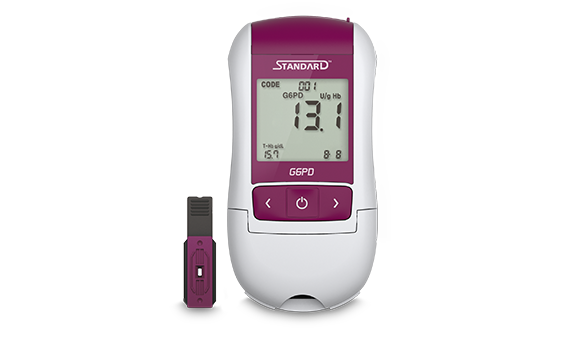 G6PD from SD Biosensor
Please download our Quick Reference Guide or contact us for a demonstration of the SD Biosensor Standard G6PD system.
Please click here to visit our Haematology page for information about other products of interest for the Haematology laboratory.
About the Author
Related

Children and adolescents living with type 1 diabetes (T1D) frequently experience challenges related ...
Read More >

As laboratories strive to produce faster, more consistent and publication-quality immunoassay data, ...
Read More >

We are delighted to announce that Oxford BioSystems will be returning to the 15th Annual Mellanby Re...
Read More >
Oxford BioSystems is pleased to announce our exclusive contract with Tecan UK to supply the IBL prod...
Read More >

Victoria Munro, Programme Manager at Oxford BioSystems, has been part of the business for 15 years. ...
Read More >

Reliable detection of neurological biomarkers in blood and cerebrospinal fluid (CSF) remains a key c...
Read More >