Neurodegenerative diseases are a group of disorders that include Alzheimer’s disease, Parkinson’s disease, Multiple sclerosis and Amyotrophic Lateral Sclerosis (ALS). All neurodegenerative diseases are characterized by the loss of neurons, resulting in cognitive or functional impairment, or sometimes both. Research in the field of neurodegeneration is highlighting more, often overlapping, diseases that have similar cellular and sub-cellular pathogenic mechanisms.
Many neurodegenerative diseases have been classified as neurodegenerative proteinopathies, as they result in the accumulation of misfolded proteins in the brain. These atypical protein conformations, or amyloids, are thought to be shaped by primary amyloid-forming proteins that contribute differentially towards disease prognosis.
The identification of a number of these proteins has led to the development of immunoassays which can aid in how these diseases are diagnosed and treated, helping patients, clinicians and researchers.
Oxford Biosystems is a leading distributor of immunoassays in the UK and Republic of Ireland. We work with international companies including Tecan IBL, Biovendor and Quansys to supply innovative and reliable immunoassays for measuring specific biomarkers in CSF and serum samples.
Alzheimer’s disease (AD)
One of the hallmarks of Alzheimer's disease is the accumulation of amyloid plaques between nerve cells (neurons) in the brain. Amyloid-beta is a protein fragment that is snipped from an amyloid precursor protein (APP). In a healthy brain these protein fragments are broken down and eliminated. In Alzheimer's disease the fragments accumulate to form hard, insoluble plaques. Current theory suggests that patients with AD have lowered amyloid-beta 1-42 (Aβ1-42) and elevated tubulin-associated unit (Tau) levels compared to healthy controls.
Amyloid-beta and Tau Alzheimer’s disease (AD), a neurodegenerative disease leading to dementia, can be characterized by 3 hallmarks,:
- Formation of Amyloid-beta plaques
- Tau fibrils
- Loss of neurons and synapses, leading to a significant brain volume reduction.
The first 2 hallmarks lead to the fact that measuring these proteins in CSF is a valuable tool to support the research of Alzheimer’s disease. To assess Amyloid-beta pathology in AD more recent clinical research has shown that the determination of the Amyloid beta ratio of Amyloid-beta (1-42)/Amyloid-beta (1-40) significantly improves the understanding of amyloid-beta pathology. Furthermore, as fibril formation of Tau proteins is characterized by hyperphosphorylation, the determination of either phosphoTau or the non-phosphorylated Tau fraction (non-pTau) might help to confirm the Tau pathology in AD.
Among the increasing number of genetic risk factors identified for Alzheimer’s Disease, the apolipoprotein E (APOE) gene remains the strongest and most prevalent, impacting more than half of all AD cases. Pathogenically, apoE seeds amyloid-β (Aβ) plaques in the brain with apoE4 driving earlier and more abundant amyloids. ApoE isoforms also have differential effects on multiple Aβ-related or Aβ-independent pathways.
The ViennaLab Apo E StripAssay® easily discriminates between the E2, E3, and E4 variants of ApoE.
For more information please visit our Neurology page.
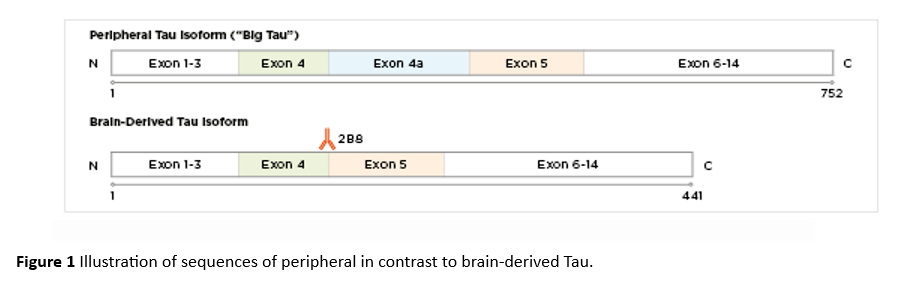
Total Tau has long been recognized as a marker of neurodegeneration in CSF, but its utility in blood is limited. The majority of blood total Tau originates from peripheral tissue, not the CNS, and is elevated in a range of conditions, including Creutzfeldt-Jakob disease (CJD), head trauma and anoxia, among others.
The Tau protein is a microtubule-stabilizing protein being part of the axons of nerve cells in the central nervous system (CNS). Measuring total Tau in CSF reflects axonal destruction and has found its way into diagnostic criteria guidelines¹, but measuring total Tau in blood does not correlate with its corresponding CSF value. As 80% of Tau in blood originates from peripheral tissue, being able to selectively measure the brain-derived fraction will enhance specificity and accessibility of Tau as an AD biomarker. The antibody used in the Tecan IBL BD-Tau LUM is a Tau junction antibody (2B8) that targets the brain-derived Tau isoform only. This kit can be reliably used for the detection of brain derived Tau in plasma and serum samples.
Neurofilaments
Neurofilaments are the backbone of the neuronal cytoskeleton. Inside the axons, the phosphorylation and dephosphorylation of the neurofilaments regulate the expansion and contraction of the microtubules, respectively. The neurofilament light chain (NFL), derived directly from the central nervous system (CNS), provides many advantages for the detection of neurodegenerative diseases. NFL is the stoichiometrically most common form, compared to the medium and heavy chain isoforms.
The level of NFL increases in the CSF and blood in proportion to the degree of axonal damage. Being able to identify and quantify axonal damage could help to improve diagnostic and prognostic accuracy for many diseases associated with the destruction of white matter, including Parkinson’s Disease, multiple sclerosis and ALS.
The new NF-light™ Serum ELISA was developed by Uman Diagnostics, a Quanterix company focusing on the development of immunochemical tools for fast and accurate determination of neurological and traumatic injuries. The kit is distributed internationally by Tecan IBL and has enabled researchers in the field of neurodegenerative disease to accurately measure NF-light values in serum.
α-Synuclein
α-Synuclein is an abundant neuronal 140 amino acid protein, predominantly localized in the presynaptic terminals, and involved in vesicle fusion and neurotransmitter release. Aggregates of α-Synuclein are the main components of Lewy bodies (LB), which are intracellular inclusions characteristic for certain neurodegenerative diseases referred to as α-synucleinopathies. These include Parkinson’s disease (PD), Parkinson‘s disease dementia (PDD), dementia with Lewy bodies (DLB) and multiple system atrophy (MSA). However, α-Synuclein aggregates are also found in approximately half of sporadic AD pathologies; consequently, it is crucial to differentiate it from pure AD forms. Tecan IBL offers an improved ELISA, provided by Roboscreen, for detection of total human α-Synuclein.
The discrimination of total α-Synuclein and disease specific α-Synuclein is of special interest for distinguishing between different patient groups. The anti-human α-Synuclein 5G4, monoclonal antibody strongly binds to the high molecular weight fraction of β-sheet rich oligomers, while no binding to primarily disordered oligomers or monomers is observed. This outstanding capability is used for the human α-Synuclein PATHO ELISA from Tecan IBL, offering a promising tool for PD researchers.
TDP43
The transactive response region DNA-binding protein 43 (TDP43) binds both DNA and RNA and is involved in transcription and splicing. Under pathophysiological conditions, TDP43 accumulates in the cytoplasm and is hyperphosphorylated and/or ubiquitinated, and this is characteristic for the cytoplasmic inclusions observed in ALS and in many cases of frontotemporal lobar degeneration syndrome (FTLD). Furthermore, TDP43 pathology is also detected in 20-50 % of AD patients and appears to be associated with greater brain atrophy, memory loss, and cognitive impairment. Several studies have been reported on CSF and plasma TDP43 in the context of ALS and FTLD, but research has been hindered by difficulties with detecting the protein. Overall, research suggests that blood based TDP43 may have a role in neurodegenerative biomarkers and could be more useful than CSF TDP43. The hTDP43 Total ELISA from Tecan IBL is suitable for use with both CSF and serum samples.
Boost your blood plasma data for neurodegenerative biomarkers
The use of immunoprecipitation using TECAN’s NEURO IP product portfolio provided by Roboscreen, will easily eliminate inhibiting matrix effects and enrich your target biomarkers.
This step will enhance the performance of your downstream assay of choice. Kits are available for:
- Total Tau
- p50 Tau
- Brain-derived Tau (BD-TAU)
- beta-Amyloid
- Patho-oligomeric alpha-Synuclein
The downstream analysis can then be any type of assay system, such as the Roche Elecsys®, the Mesoscale QuickPlex, Quanterix SIMOA®, Fujirebio Lumipulse® or any type of ELISA.
For more information on the assays available from Oxford Biosystems for research in Neurodegenerative diseases, please contact us directly
Phone +44 (0)1235 431390 or send us an Email
Our sales team and technical specialists are available to discuss your specific requirements.